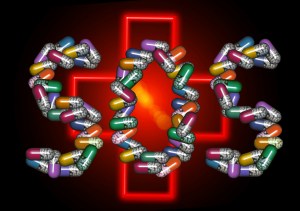
Antimicrobial resistance
Antimicrobial resistance (AMR) has been a major public health threat for quite some time now. Since the discovery of penicillin in 1928, we have enjoyed a golden era of antibiotics for several decades. However, the widespread use of antibiotics and the resulting selective pressure has led to the rapid emergence of antibiotic resistance. According to the Center for Disease Control (CDC), at least 2.8 million people are infected with antibiotic-resistant bacteria or fungi, and more than 35000 people die as a result each year in the U.S. alone [1]. According to the World Health Organisation (WHO), antibiotic resistance is rising to dangerously high levels in all parts of the world. New resistance mechanisms are emerging and spreading globally, threatening our ability to treat common infectious diseases [2].
Lack of new antibiotics
In addition to the rapid emergence of resistance, there is a lack of new antibiotics over the past few decades. This is at least partly associated with the high cost and low return of antibiotic development. Drug development is expensive [3]. This is particular problematic for antibiotics. The current business model of drug development by the private sector means that the development of new treatment is incentivised by the expected return on investment. However, the use of any new antibiotics, if successful developed, will be restricted since they will have to be reserved as last resort treatments to minimise the development of resistance. This is hardly commercially viable and makes it difficult to justify allocating resources to the development of such a treatment with low potential for success, high risk of resistance and restricted prospective usage.
A different funding model
To this end, an alternative business model has been proposed. If we view effective antibiotics as an life-saving essential resource, analogous to clean water and health care, then we have to maintain it as such at all cost supported by the public sector. In recently years, several public-private partnerships for the development of new antimicrobial treatments have been initiated. There are several EU supported programmes including the Joint Programming Initiative on Antimicrobial Resistance (JPIAMR) and the Innovative Medicines Initiatives (IMI), which is funding a number of academic-industrial partnerships dedicated to antimicrobial development. In these collaborations, multi-disciplinary teams consisting of members with different competencies including scientists, academics, industrial partners, regulatory reviewers, etc. all join forces for this cause. I am fortunate to have been part of these efforts to address this antibiotic crisis.
What can you do
We can all contribute in our own way. When you feel sick, discuss with your doctor and only use antibiotics as prescribed and if they are needed. Inappropriate use of antibiotics such as erratic adherence to the prescribed dosing regimen and incomplete courses of antibiotic can contribute to the emergence of resistance. You can also help spread this message to the ones around you about the urgency of this antibiotic crisis, so we can all contribute and be part of the solution.
 CAREX
CAREX 
Leave a comment